 Written and reviewed by
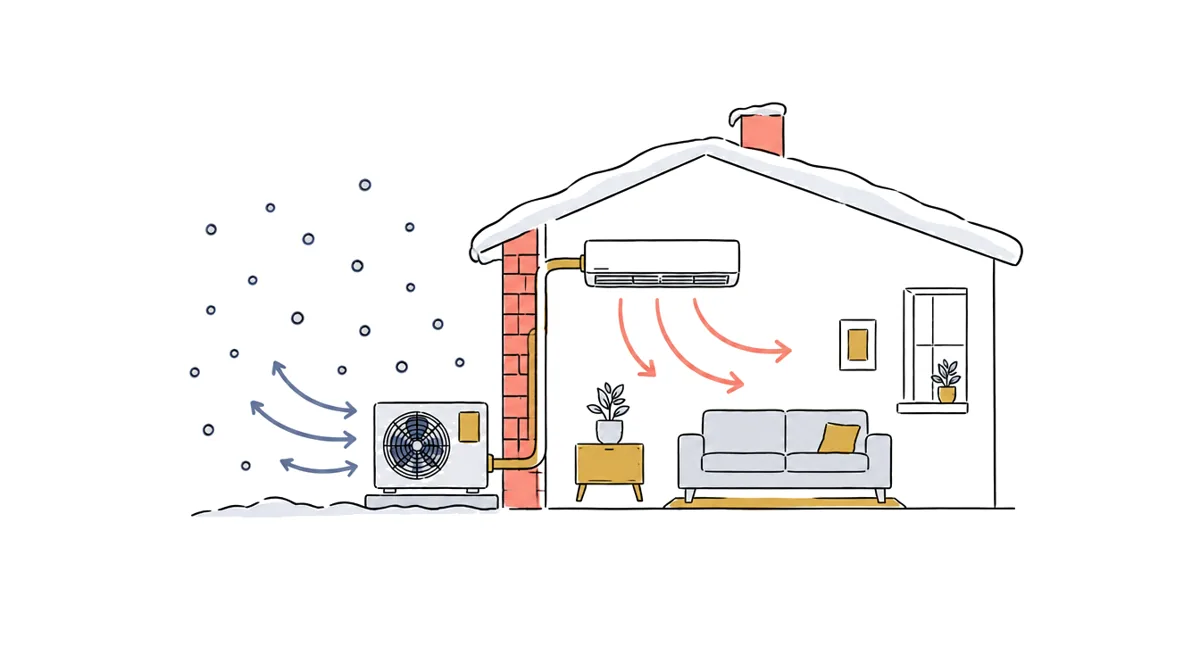
Short answer: A heat pump is an electric system that moves heat instead of burning fuel to make it. In winter it pulls heat out of the outdoor air and brings it inside, and in summer it runs in reverse to cool your home. Because it moves heat, NRCan says its typical efficiencies are well over 100%.
How does a heat pump work?
A heat pump uses electricity to move heat from a colder place to a warmer one, much like your fridge does, pointed the other way.
- It collects heat outside. Refrigerant in the outdoor coil absorbs heat from the air.
- It raises the temperature. A compressor squeezes the refrigerant, which makes it hot.
- It releases the heat inside. The hot refrigerant warms your indoor air, then cycles back out.
- It reverses in summer. A reversing valve sends heat the other way, so it cools like an air conditioner.
Even freezing air holds heat. NRCan says air at -18°C still holds 85% of the heat it holds at 21°C, so a heat pump keeps heating on a cold January morning. It just works less efficiently as it gets colder, as the numbers below show.
You may qualify for up to $10,000 back
Tap through a few questions and see your rebate in 2 minutes. No email.
Check my eligibility
Why is a heat pump so efficient?
A furnace burns fuel, and NRCan says furnace efficiencies remain below 100%. A heat pump spends its electricity moving heat that's already outside, so it delivers more heat than the electricity it uses.
That ratio is the coefficient of performance, or COP. In NRCan's example, 1 kW of electricity moving 3 kW of heat is a COP of 3. Here's how NRCan says the COP falls as it gets colder:
| Outdoor temperature | Typical COP |
|---|---|
| 8°C | 2.0 to 5.4 |
| -8°C | 1.1 to 3.7 |
The COP falls as it gets colder, because the unit works across a bigger temperature gap. Even the low end gives you more heat than the electricity you pay for, so ask each contractor for the model's heating output at your area's coldest temperature. Where that heat ends up depends on the equipment in your home.
What does a heat pump look like in your home?
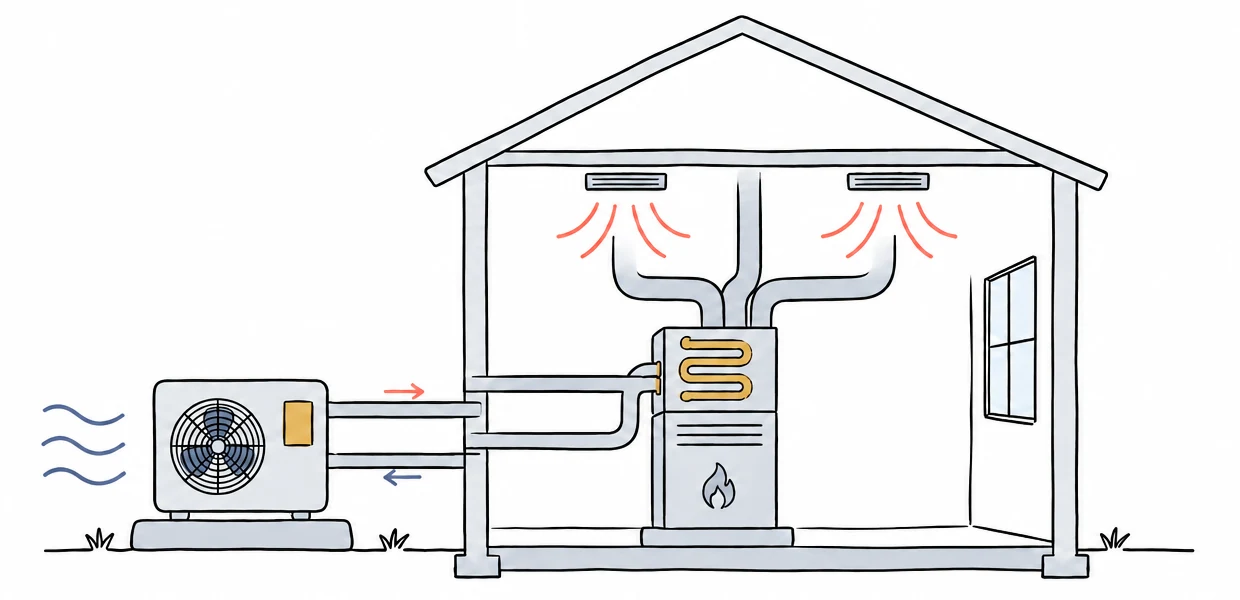
An air source heat pump has an outdoor unit, and what sits inside depends on whether you have ducts.
- Ducted: the indoor coil sits in your ductwork, and ducts carry the air to each room.
- Ductless: wall or floor units heat or cool the room they're in. A mini-split has one indoor unit, and a multi-split has several.
Coming from a furnace, you may notice the air from your vents feels different. NRCan says a heat pump normally heats air to 25°C to 45°C, against 55°C to 60°C for a furnace, so it moves more air at a lower temperature. Some ducts need changes to carry that airflow quietly, so ask your contractor to check yours. With the ducts sorted, the cold is the next thing to check.
Does a heat pump work when it's very cold?
Yes for cold climate models, which Environment and Climate Change Canada says work as low as -30°C. Any air source heat pump may lose some of its ability to heat at very cold temperatures, though. NRCan says most have a minimum operating temperature, so most installs need a supplementary heat source for the coldest days. Our winter guide goes deeper on backup heat.
Pro tip before you buy: ask your contractor or an energy advisor to estimate the running cost in your area. NRCan says heat pumps cost more upfront than furnaces or electric baseboards, and in some regions utility rates can make that cost take longer to earn back.
Does the National Heat Pump Rebate cover a heat pump?
It can, if your household and your exact unit both qualify. According to Canada.ca, households above median income may be eligible for $2,000, and households below median income for up to $10,000. The unit must be on NRCan's eligible heat pump list, matched by its AHRI number, and an HVAC contractor has to sell and install it.
Applications open through an online portal in early 2027, and installs from November 1, 2026 may qualify. Our page on who qualifies walks through the rules, and installing now or waiting covers the timing.
Frequently asked questions

Yes, or it can work alongside it. NRCan describes heat pumps that replace or supplement a central furnace, and Canada.ca says you don't have to remove your existing system to claim the rebate. If you heat with natural gas, Canada.ca notes your bills may not drop in every region, so get a running cost estimate first.
No. The same system cools your home in summer, and NRCan describes heat pumps installed to replace a central air conditioner.
Modern ones are often quieter than traditional heating and AC systems, according to Environment and Climate Change Canada. NRCan says most have a sound rating of 76 dB or lower, and lower means quieter, so compare the ratings on your quotes.
NRCan gives 15 to 20 years for an air source heat pump. It advises yearly maintenance by a qualified contractor and a new or cleaned air filter every 3 months, since a clogged filter cuts airflow and efficiency.
The bottom line
A heat pump moves heat instead of making it, so one electric system can heat and cool your home. NRCan says it should be sized to your climate and your home's heating and cooling loads, and your income decides whether the rebate is $2,000 or up to $10,000.
Your next step is to check whether your household could get the rebate before you collect quotes. Then our vetted, licensed contractors can quote the exact model and put its AHRI number in writing.
Sources: NRCan, heating and cooling with a heat pump · ECCC, find the facts about electric heat pumps · Canada.ca, National Heat Pump Rebate